
Introduction
Your stomach is in revolt. You can’t hold anything down, and every bite feels like a gamble. The brat diet — bananas, rice, applesauce, and toast — has been passed down through families and recommended by doctors for decades. But does it actually work? And is it still the right call? If you’ve been told to eat “BRAT foods” and aren’t sure why, or you want to know whether there’s something better, this guide gives you straight answers backed by current medical thinking.
What Is the BRAT Diet, Exactly?
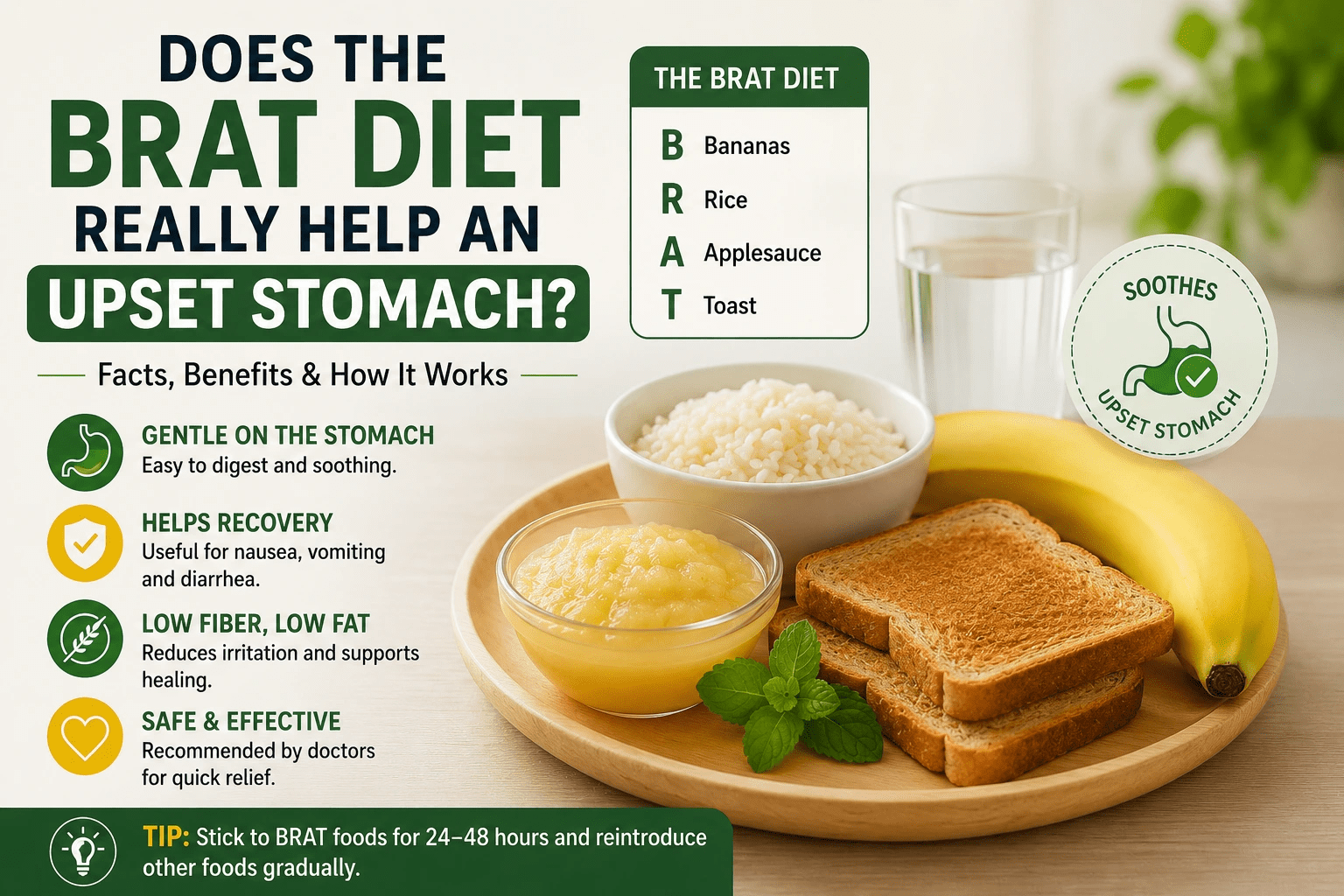
The brat diet is a short-term eating plan made up of four bland, low-fiber foods: bananas, rice, applesauce, and toast. The name is a simple acronym. Each food was chosen because it’s easy to digest, gentle on an irritated gut lining, and unlikely to make diarrhea or nausea worse.
Doctors and pediatricians began recommending it widely in the mid-20th century. At the time, the logic was simple — give the digestive system a break by removing anything that could trigger cramping, loose stools, or vomiting.
The BRAT Diet Food List and Why Each Item Was Chosen
| Food | Key Benefit | Active Compound/Property |
| Bananas | Replaces lost potassium | Natural electrolytes, pectin |
| Rice (white) | Firms up loose stools | Low fiber, easily digested starch |
| Applesauce | Soothes gut lining | Pectin, gentle natural sugars |
| Toast (white) | Settles nausea | Bland starch, absorbs stomach acid |
Each food shares three traits: low fat, low fiber, and minimal seasoning. These qualities reduce the workload on your digestive tract while it recovers.
Some versions of the diet extend the acronym to BRATT (adding tea) or BRATTY (adding yogurt). Both are sensible additions since yogurt with living cultures promotes gut flora and ordinary tea contains tannins that might reduce inflammation.
When Should You Use the BRAT Diet?
The brat diet works best during the first 24 to 48 hours of an acute gastrointestinal illness. It makes the greatest sense in the following circumstances:
- Acute viral gastroenteritis (stomach flu)
- Traveler’s diarrhea during early recovery
- Food poisoning — particularly during the phase when vomiting has stopped but the stomach still feels raw
- Post-surgery recovery — when doctors want minimal digestive stimulation
- Morning sickness — some people find the bland foods manageable when nothing else stays down
The brat diet is a short-term tool. It is not a long-term diet.
BRAT Diet for Adults vs. Children: Is There a Difference?
The short answer is yes — the approach differs slightly.
For adults, the brat diet can be used for one to two days. Adults can usually transition back to regular foods faster. The American College of Gastroenterology suggests adults resume normal, easily digestible foods as soon as they feel ready, rather than staying on restricted foods longer than necessary.
For children, the old advice used to be stricter — doctors would sometimes recommend 24 hours of clear liquids first, then BRAT foods. Today, pediatric guidelines from the American Academy of Pediatrics (AAP) have shifted. The AAP now recommends that children return to age-appropriate foods early in the illness rather than being held to a strict brat diet, primarily because prolonged nutritional restriction can affect a child’s recovery and energy levels.
For infants, never use the brat diet without talking to your pediatrician. Breast milk or formula should continue.
What Do Doctors Say About the BRAT Diet Now?
Here’s the honest update: medical opinion on the brat diet has changed.
Major health organizations, including the American Academy of Pediatrics and gastroenterology groups, have moved away from hard endorsements of the brat diet. Their primary concern is that eating just those four foods for longer than a few days is nutritionally deficient, not that BRAT foods are dangerous. The diet is low in protein, fat, and several vitamins your body needs to repair tissue and fight infection.
According to research published in journals like Alimentary Pharmacology & Therapeutics, early refeeding after gastroenteritis — meaning getting back to normal food sooner — actually shortens recovery time compared to prolonged food restriction.
So the current consensus looks like this:
- Use the brat diet as a bridge, not a long-term solution
- Start with BRAT foods when you can’t tolerate much else
- Move toward a regular balanced diet as soon as you feel ready
- Prioritize hydration — this matters more than which specific foods you eat
BRAT Diet Benefits That Still Hold Up
Despite newer recommendations pulling back on strict adherence, the brat diet still has real advantages:
Stool binding effect. White rice and bananas contain soluble fiber and resistant starch that can help firm up loose stools. This is clinically useful during diarrhea.
Easy electrolyte replacement. Bananas provide potassium, which you lose through vomiting and diarrhea. This alone makes them worth eating during a stomach illness.
Reduces gut stimulation. Low-fat, low-fiber foods require less digestive effort. When your gut is inflamed or irritated, this matters.
Reduces nausea triggers. Strong flavors, strong smells, high fat content — all of these can make nausea worse. BRAT foods eliminate most common nausea triggers.
Widely accessible. These are inexpensive, readily accessible at any supermarket, and simple to make.
What to Eat on the BRAT Diet: A Practical One-Day Plan
If you’re starting the brat diet today, here’s a simple eating framework:
Morning
- Plain white toast (no butter)
- Small portion of applesauce
- Water or diluted electrolyte drink
Midday
- Plain white rice (no oil or seasoning)
- Half a banana
Afternoon
- Plain crackers (saltines work if toast isn’t available)
- Small sips of clear broth
Evening
- White rice with a small amount of plain boiled chicken (if you feel ready to expand)
- Banana
Throughout the day
- Water, coconut water, diluted sports drinks, or an oral rehydration solution (ORS) like Pedialyte
What NOT to Eat During Stomach Illness
While on the brat diet or recovering from a stomach bug, avoid these:
- Dairy products (except yogurt with live cultures once feeling better)
- Fried or fatty foods — these slow gastric emptying and worsen nausea
- Spicy food — irritates an already inflamed gut lining
- Raw vegetables — high insoluble fiber increases intestinal motility
- Caffeinated drinks — caffeine stimulates intestinal movement
- Alcoholdehydrates and irritates the lining of the stomach.
- High-sugar foods and juices — can worsen osmotic diarrhea
- Whole grains — too high in fiber during acute illness
BRAT Diet for Nausea: Does It Help?
Yes — though the mechanism is indirect. The brat diet does not directly suppress nausea (that requires medication like ondansetron in severe cases), but the foods it includes remove almost every common dietary nausea trigger.
Plain white toast is the standout here. Starchy foods absorb excess stomach acid and provide just enough substance to stabilize blood sugar without overwhelming a queasy stomach. For this reason, a lot of people who suffer from morning sickness consume toast or simple crackers first thing in the morning.
Applesauce is also worth noting for nausea — it provides natural simple sugars that give you energy without demanding much digestive effort.
How Much Time Should You Spend Following the BRAT Diet?
Generally speaking, no longer than 48 hours. This is the consistent guidance from current clinical resources.
After 48 hours on the brat diet, your body starts to need more — specifically protein, healthy fats, and a wider range of micronutrients. Staying on BRAT foods past this point can actually slow recovery by denying your immune system the building blocks it needs.
Here’s a practical timeline:
| Phase | Duration | What to Do |
| Acute illness | 0–24 hours | Clear liquids only, oral rehydration |
| Early recovery | 24–48 hours | Full brat diet foods |
| Transition | 48–72 hours | Add soft proteins (eggs, boiled chicken) |
| Normal eating | 72+ hours | Return to regular balanced diet |
Hydration: The Part of the BRAT Diet Most People Overlook
Hydration is not just a supporting player — it is the most critical part of recovering from any stomach illness. Diarrhea and vomiting can cause rapid fluid and electrolyte loss. Dehydration worsens weakness, prolongs illness, and in vulnerable populations (young children, elderly adults), it can become dangerous.
The World Health Organization (WHO) recommends oral rehydration solution (ORS) as the frontline treatment for diarrhea-related dehydration. Commercial ORS products like Pedialyte match the electrolyte profile recommended by WHO guidelines.
Plain water is fine, but it does not replace electrolytes. Body-focused: Every bout of vomiting or loose stool pulls water and vital electrolytes straight out of your body., electrolyte replacement matters as much as — possibly more than — what solid food you eat.
Signs of dehydration to watch for:
- Dark yellow urine
- Dry mouth and lips
- Dizziness when standing
- No urination for 8+ hours
- When children cry, they have sunken eyes and no tears.
When the BRAT Diet Isn’t Enough: See a Doctor
The brat diet is appropriate for mild, self-limiting illness. Seek medical attention if:
- In adults, diarrhea lasts longer than three days; in small children, it lasts longer than twenty-four hours.
- You see blood in stool or vomit
- Fever is above 102°F (38.9°C)
- Signs of severe dehydration appear
- Symptoms came on after travel to a region with known water safety concerns
- You are pregnant, immunocompromised, or have a chronic GI condition
These situations may require stool testing, IV fluids, or prescription medication — none of which the brat diet can address.
BRAT Diet vs. Other Bland Diets: What’s the Difference?
The brat diet is one version of a broader category called a bland diet. Here’s how it compares:
| Diet Type | Foods Included | Best For |
| BRAT diet | Bananas, rice, applesauce, toast | Acute diarrhea, vomiting, stomach flu |
| Full bland diet | All BRAT foods + eggs, lean meat, cooked vegetables | Post-surgery, chronic digestive conditions |
| Low-residue diet | Low-fiber foods, refined grains, cooked produce | Flare-ups of IBD, Crohn’s disease, colitis |
| Liquid diet | Broth, clear juices, gelatin | Pre/post procedure, severe nausea |
| FODMAP diet | Excludes fermentable carbohydrates | IBS management (long-term) |
The brat diet is narrower and more restrictive than a standard bland diet. For people managing chronic digestive conditions, a broader bland diet under a dietitian’s guidance is usually more appropriate.
BRAT Diet FAQs
Q: Can you eat eggs on the brat diet?
A: Plain scrambled or boiled eggs are not strictly part of the core brat diet, but many doctors now recommend adding them within 24–48 hours. Eggs are easy to digest, provide protein your body needs for recovery, and have no added fat if prepared plain. Think of them as the first step off the BRAT list.
Q: Is the brat diet safe for toddlers?
A: Yes, with adjustment. The foods are safe for toddlers, but current AAP guidance recommends not restricting a sick toddler to only BRAT foods for more than 24 hours. Continue offering a variety of soft, gentle foods and prioritize oral rehydration. Always consult your pediatrician if you’re unsure.
Q: Does the brat diet help with the stomach flu?
A: It can help manage symptoms. The brat diet reduces dietary triggers that worsen diarrhea and nausea during stomach flu (viral gastroenteritis). Your immune system is the only one that can treat the virus itself. Hydration remains the most important intervention.
Q: Can I drink coffee on the brat diet?
A: No. Caffeine stimulates intestinal contractions and can worsen diarrhea and nausea. Stick to water, herbal tea, clear broth, or oral rehydration solutions while following the brat diet.
Q: How do I transition off the brat diet?
A: Start adding one food at a time. After 24–48 hours, introduce plain boiled chicken or eggs, then soft cooked vegetables, then dairy (if tolerated), then gradually return to your regular diet. Avoid fried or spicy foods for a few additional days even after leaving the BRAT phase.
Q: Is the brat diet effective for adults with IBS?
A: The brat diet was not designed for IBS. While some BRAT foods (white rice, cooked applesauce) are low-FODMAP and may suit some IBS sufferers, the diet is too narrow for managing a chronic condition. A registered dietitian working with a low-FODMAP protocol is a better fit for IBS.
The Right Way to Use the BRAT Diet in 2025
The brat diet is not outdated — it’s just no longer the whole story. The foods it includes genuinely help during acute stomach illness. Bananas replace electrolytes. Rice and toast bind loose stools. Applesauce is gentle and easy to digest. These properties are real and clinically useful.
What has changed is the rigidity. Staying on only four foods for days at a time is no longer considered best practice. The stronger current guidance is: hydrate aggressively, use BRAT foods in the first 24–48 hours, then return to normal eating as soon as you can tolerate it.
When your digestive system receives the nutrition it need, it heals more quickly. The brat diet gives it breathing room — but real recovery comes from giving your body fuel to rebuild.
If symptoms persist beyond 48–72 hours, or if you notice blood, high fever, or severe dehydration, stop managing this at home and see a doctor.
Sources
- American Academy of Pediatrics — Gastroenteritis recommendations for children: https://www.aap.org
- World Health Organization — Oral Rehydration Therapy guidelines: https://www.who.int/news-room/fact-sheets/detail/diarrhoeal-disease
- American College of Gastroenterology — Clinical guidelines for acute diarrhea: https://gi.org
- Harvard Health Publishing — Is the BRAT diet the best choice for an upset stomach: https://www.health.harvard.edu/digestive-health/is-the-brat-diet-the-best-choice-for-an-upset-stomach
- National Institute of Diabetes and Digestive and Kidney Diseases (NIDDK) — Eating, diet, and nutrition for diarrhea: https://www.niddk.nih.gov
This article is for informational purposes only and does not replace advice from a licensed medical professional. If you have concerns about a digestive illness, speak with your doctor or healthcare provider.