The Sweet Heart of Italy: A Complete Guide to Authentic Italian Desserts
A Promise of Dolce Vita
You haven’t truly tasted Italy until a spoonful of chilled tiramisu melts on your tongue. This guide cuts through the noise and delivers only the most iconic, make-at-home Italian desserts that define generations of family tables. You will learn the backstories, exact methods, and local secrets of more than 25 candies. We focus on real ingredients and time-tested methods that guarantee a perfect finish to any meal.
The Philosophy of Italian Sweets
Italian cooks treat sugar with respect, not as a crutch. The philosophy rests on balancing bitter coffee with sweet mascarpone, or tart citrus with crisp pastry. You rarely find cloying sugar bombs. Instead, these Italian desserts highlight fresh ricotta, toasted nuts, fragrant citrus zest, and dark chocolate. Every bite tells a story of regional bounty.
The culture demands simplicity. A classic crostata uses the same jam your grandmother spooned from a jar. This restraint places the burden of flavor on the quality of the ingredients. When you select fresh farm eggs and cold-pressed olive oil, you honor the tradition that makes these sweets legendary.
Tiramisu: The Undisputed King
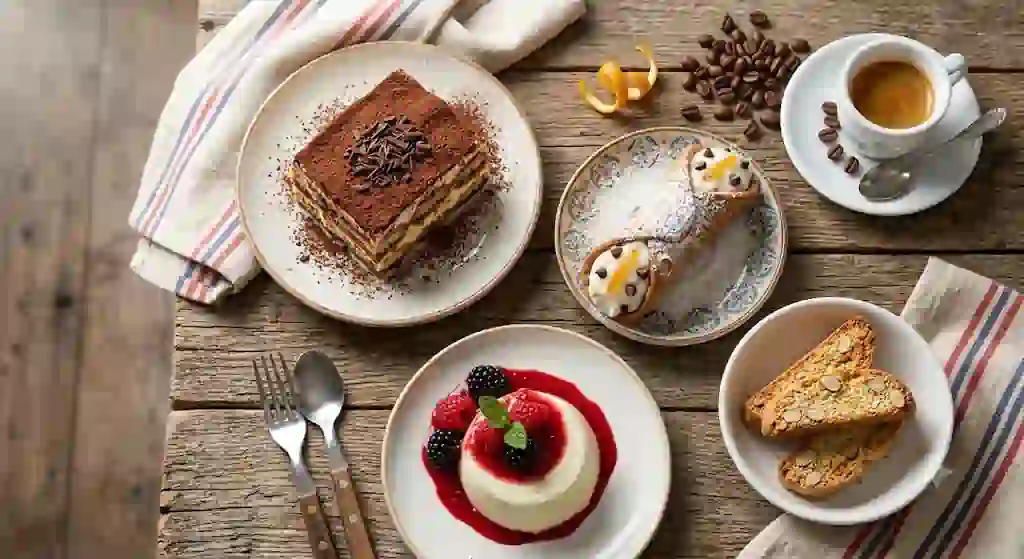
No menu of Italian desserts commands respect like tiramisu. This layered masterpiece requires no oven, only patience. You build it with savoiardi biscuits, quickly soaked in strong espresso, and layer them with a cloud-like zabaglione cream made from egg yolks, sugar, and mascarpone.
The name translates to “pick me up,” a nod to the caffeine kick. True mastery lies in the timing of the dip. A split-second too long creates a soggy mess; too short leaves a dry biscuit. Dust the final layer with a storm of bitter cocoa powder. Let it rest overnight. This waiting period transforms separate components into a unified, silky block that slices like a dream.
The Silky World of Panna Cotta
Panna cotta stands as the ultimate blank canvas. This cooked cream dessert relies on gelatin for its signature wobble. A true panna cotta jiggles gently, cutting cleanly with the side of a spoon. It must taste of pure dairy, elevated by a glossy vanilla bean speckle.
You heat heavy cream with sugar and vanilla until the sugar dissolves. After blooming the gelatin, you whisk it in and pour the liquid silk into molds. The magic happens during the four-hour chill. Unmold it onto a plate and watch it shiver. A sharp berry coulis or a drizzle of wild honey cuts the richness. Northern Italy’s Piedmont region claims this beauty, pairing it often with local hazelnuts.
A Quick Guide to 10 Foundational Italian Desserts
| Dessert Name | Primary Texture | Key Flavor Profile |
| Tiramisu | Creamy, Velvety | Espresso, Cocoa |
| Panna Cotta | Silky, Gelatinous | Vanilla, Sweet Cream |
| Cannoli | Crisp, Grainy | Sweet Ricotta, Citrus |
| Sfogliatella | Flaky, Chewy | Orange, Cinnamon |
| Zabaglione | Airy, Foamy | Marsala Wine, Egg |
| Gelato | Dense, Smooth | Pistachio, Fruit |
| Semifreddo | Frozen, Mousse-like | Nougat, Chocolate |
| Biscotti | Dry, Crunchy | Almond, Anise |
| Bomboloni | Pillowy, Fried | Vanilla Custard, Sugar |
| Torta Caprese | Dense, Moist | Dark Chocolate, Almond |
Cannoli: The Crunch of Sicily
A cannoli shell should shatter upon the first bite, revealing a creamy heart. The filling is not just standard cream cheese. Ricotta, drained for hours until bone-dry, creates the authentic grainy texture. You fold in powdered sugar and miniature dark chocolate chips or candied orange peel.
The shells should be fried until they bubble and blister. They must cool completely before you pipe the filling in. To prevent sogginess, fill the cannoli right before serving. The contrast between the fried, brittle dough and the cold, sweet ricotta defines Sicilian pastry art. This street food represents the soul of Southern Italian desserts.
Gelato vs. Ice Cream: The Density Debate
Calling gelato “ice cream” misses the point entirely. Gelato churns slowly, incorporating far less air. This creates a dense, almost elastic texture that coats your tongue. It also contains more milk than cream, reducing the fat content but not the flavor.
Because fat coats the palate, lower fat in gelato allows the true flavor of pistachio or hazelnut to blast through immediately. You serve it at a slightly warmer temperature, too. This prevents the numbing effect of freezing cold on your taste buds. When searching for authentic Italian desserts, the silky density of a scoop is the number one sign of quality.
Regional Heroes You Must Try
Italy’s geography writes its pastry menu. In Naples, the Sfogliatella reigns. Bakers stretch dough paper-thin, layering it with lard until it resembles a sheaf of wheat. The “lobster tail” shape holds a filling of semolina, ricotta, and candied citrus that steams inside the flaky shell.
Travel north to Verona for a slice of Pandoro, a golden, star-shaped bread dusted with vanilla-scented sugar. In Tuscany, Panforte packs a dense, chewy punch with almonds, honey, and black pepper. Sardinia offers Seadas, a disc of semolina dough encasing pecorino cheese, deep-fried and drenched in bitter honey. These Italian desserts prove that sugar takes many forms across one boot-shaped peninsula.
Mastering the Zabaglione Foam
Zabaglione requires a strong arm and a watchful eye. You whisk egg yolks, sugar, and sweet Marsala wine over a pot of simmering water. The mixture must triple in volume without scrambling. The goal is a light, billowy froth that tastes of warm wine and custard.
You eat it immediately, often with ripe figs or amaretti biscuits. The technique defines the line between amateur and expert. A perfect zabaglione never sees the inside of a refrigerator. It serves as the building block for other Italian desserts, including the classic tiramisu cream base.
Semifreddo: The No-Churn Magic
A semifreddo bypasses the need for an ice cream machine. This frozen mousse combines a rich custard base with whipped cream and a flavoring agent like nougat, pistachio paste, or berry purée. The fat from the cream prevents large ice crystals from forming, keeping the texture silky even after freezing.
You press the mixture into a loaf pan lined with plastic wrap. After a deep freeze, you turn it out and slice it like a pâté. Drizzle it with warm espresso or chocolate sauce just before eating. It’s the most elegant solution for summer dinner parties.
The Art of the Italian Crostata
A crostata is a visual and textural masterpiece. The dough, pasta frolla, uses a high ratio of butter and egg yolks. It bakes into a sandy, crumbly cookie-like base. You don’t roll it perfectly; you patch it. This rustic nature lets the filling peek through the lattice top.
The classic fillings—apricot, cherry, or blueberry—stay minimal. The fruit must taste concentrated, not watery. Brush the warm shell with a sugar glaze. Served alongside a tiny cup of espresso, a slice of crostata is the cornerstone of home-baked Italian desserts.
All About Biscotti and Dipping
Biscotti undergo a double bake. First, a log bakes until firm. Then, you slice it on a bias and bake the slices again. This process evaporates all moisture, yielding a rock-hard cookie designed specifically for submersion.
You dip them in Vin Santo, a holy wine from Tuscany. The cookie pores open like a sponge, soaking up the amber liquid without crumbling instantly. Almond is the traditional base, but anise seeds and dried cranberries add modern flair. Unlike soft cookies, these Italian desserts last for weeks in a tin, always ready for unexpected guests.
Flourless Indulgence: Torta Caprese
Originating from the Isle of Capri, this cake accidentally satisfies gluten-free needs without sacrificing dignity. The recipe calls for finely ground almonds or almond flour, melted dark chocolate, butter, and separated eggs.
The absence of flour creates a fudge-like, crackly crust and a moist, collapsing interior. You dust it with confectioners’ sugar so it resembles the island’s snowy mountain peaks. It proves that Italian desserts naturally embrace alternative ingredients without marketing hype. Serve a thin wedge with a dollop of barely sweetened whipped cream.
Frying for Joy: Bomboloni and Zeppole
Italian fry oil signals a celebration. Rolled with granulated sugar, bomboloni are pillow-soft filled doughnuts. A piping bag filled with vanilla custard pierces the side, leaving a hidden core of cream.
Zeppole, on the other hand, are irregularly shaped drops of choux pastry fried until golden. They emerge hollow and light, drenched in honey and confectioners’ sugar. Whether honoring St. Joseph’s Day or a simple Sunday, the scent of frying dough represents the communal joy of Italian desserts shared straight from the paper bag.
Crafting the Ultimate Affogato
Affogato means “drowned.” It’s a two-ingredient drama. You place a scoop of dense fior di latte gelato or vanilla gelato in a glass. You pull a hot, short shot of espresso directly over it.
The hot coffee scalds the cold cream, creating bitter, caramelized rivers in the milky base. You fight the melting clock, scooping spoonfuls that move from frozen solid to a liquid latte. It’s a dessert and a digestif in one, the ultimate choice when you need a quick hit from the list of Italian desserts.
Common Missteps and Fixes
Many fail with ricotta by not draining it. Watery ricotta leaks from cannoli shells like a faucet, ruining the crunch. You must hang it in cheesecloth overnight. Another tragedy is over-soaking ladyfingers. Count “one-one-thousand” for the dip, then immediately lift. With panna cotta, adding too much gelatin creates a rubbery tennis ball. Use just enough to make the cream tremble.
The quality of cocoa matters intensely. Dutch-processed cocoa in tiramisu tastes darker and less acidic. Finally, never serve gelato straight from a deep freeze. Let it temper for ten minutes. The texture of Italian desserts depends on this temperature shift.
Pairing Wine and Coffee with Sweets
Never battle your palate. The drink must be sweeter than the dessert, according to the guideline.A dry espresso cuts through tiramisu perfectly, but a dry sparkling wine with a sweet pastry tastes metallic and sharp. Vin Santo and biscotti are a timeless marriage because the wine’s syrupy body matches the almond crunch.
For creamy Italian desserts like panna cotta, a late-harvest Moscato d’Asti with its gentle bubbles cleans the tongue. For dark chocolate torta Caprese, an aged tawny port or a bitter Amaro offers a masculine, smoky finish. Never underestimate the power of a simple macchiato.
Your Essential Tools and Pantry
Stock your kitchen like a Roman nonna. You need a digital scale. Italian baking relies on grams, not cups, for precision. A high-quality silicone spatula scrapes every bit of zabaglione from the bowl. A heavy-bottomed saucepan prevents scorched cream.
Keep your pantry loaded with “00” flour for pastry, fine semolina, and pure cane sugar. Almond flour, raw pistachios, and dark chocolate couverture belong on your shelf. The extracts must be pure—real almond essence, not imitation. These staples ensure your Italian desserts taste transported, not adapted.
Frequently Asked Questions
What are some Italian desserts that are not tiramisu?
You must try cannoli, panna cotta, and affogato. A bright lemon granita from Sicily and dense Torta Caprese from Capri also sit high on the list of authentic options.
Why does my panna cotta turn out rubbery?
You used too much gelatin. Reduce the powder slightly and aim for a gentle “Jell-O” wobble, not a firm bounce. The cream must break apart with zero effort from your spoon.
What desserts can diabetics eat if they love Italian sweets?
Focus on dark chocolate Torta Caprese made with monk fruit sweetener or a ricotta mousse sweetened with vanilla bean. Always consult a doctor, but almond-based cakes often have a naturally lower glycemic impact.
Are Italian desserts gluten free naturally?
Yes, many are. Torta Caprese uses only almond flour, and semifreddo is a frozen mousse. Panna cotta relies on gelatin, while a well-made zabaglione contains just eggs, sugar, and wine.
How do you say desserts in Italian?
The word is dolci (singular dolce). You’ll also hear dolcetti for small, bite-sized pastries or cookies.
What are the top 10 summer desserts in Italy?
- Affogato
- Lemon Granita
- Semifreddo
- Gelato (Pistachio)
- Peach and Amaretti Crumble
- Chilled Zabaglione
- Watermelon Granita
- Tiramisu (yes, it’s perfect cold)
- Panna Cotta with Berries
- Coconut Gelato
A Final Spoonful of Passion
You now hold the blueprint to Italy’s sweetest secrets. The magic lives in the simplicity of the ingredients and the precision of your hands. Dust your workspace with flour, pull a shot of strong espresso, and choose a recipe that scares you just a little.
Start with the tiramisu, master the panna cotta, and fry the cannoli shells to a deep gold. The aroma in your kitchen will transport you. Share these Italian desserts with people who laugh loudly and stay late at the table. That, above all else, is the true Italian way.