
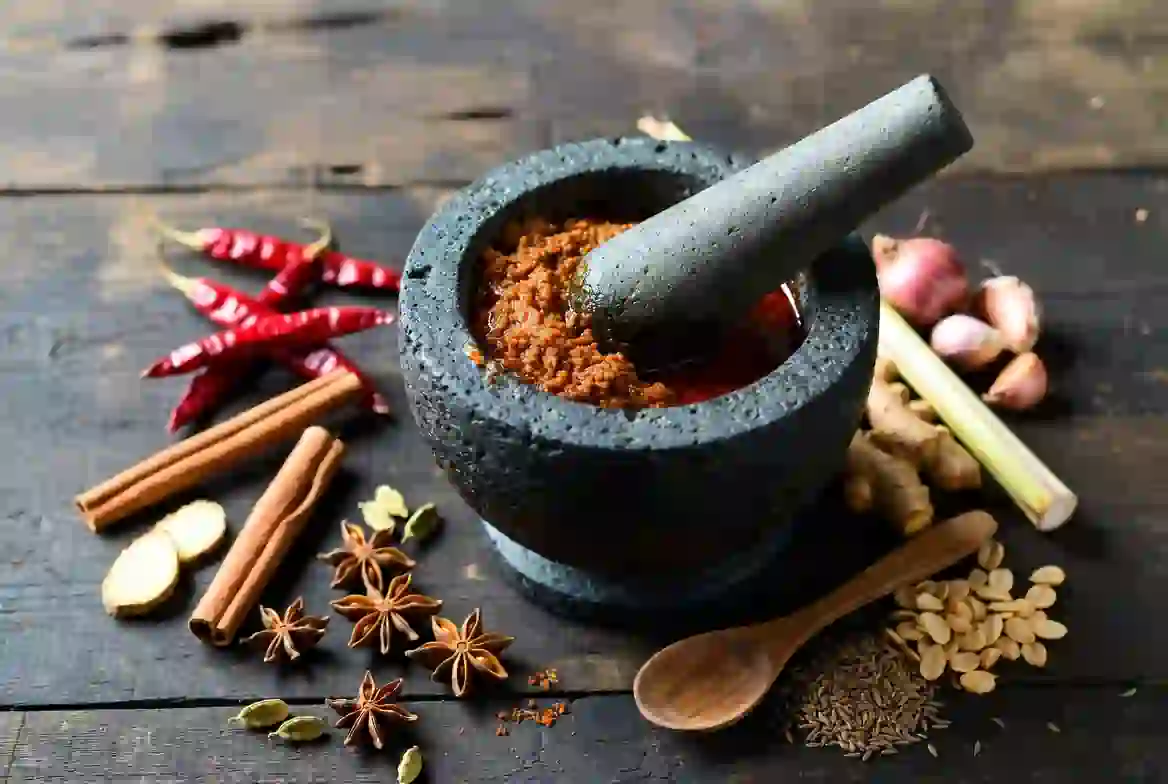
You open a small tin of massaman curry paste, and the air fills with the scent of dried spices, warm cumin, and sweet cardamom. This isn’t just another hot curry base; it’s the aromatic heart of a dish influenced by Persian and Malay traders, now a celebrated staple in Thai cuisine. This manual goes beyond a straightforward explanation. You will learn exactly what makes this paste unique, how to cook with it, and why it creates a flavor profile unlike any other Thai curry.
What Exactly Defines Massaman Curry Paste?
A distinctive Thai curry base, Massaman curry paste combines dried Persian and Indian spices with aromatic local ingredients. Unlike the bright, fresh heat of green or red pastes, this paste relies on deep, warm, and slightly sweet notes. Its foundation includes dried red chilies, lemongrass, galangal, and shallots. The defining twist comes from the addition of cumin, coriander seeds, cinnamon, cloves, star anise, and cardamom.
This combination yields a complex paste that delivers a gentle, slow-building warmth rather than an immediate fiery punch. When you open a container, the dominant scents are the earthy spices and a subtle nuttiness, often from peanuts, which are a core component. This paste is the starting point for a curry that feels both exotic and comfortingly familiar.
The Historical Crossroads on Your Plate
This paste tells a story of cultural exchange. Its name likely derives from “Mussulman,” an archaic term for Muslims. A 17th-century Persian trader or diplomat is often credited with bringing the spiced dish to the Siamese court. Thai cooks then reimagined it, adding local ingredients like lemongrass and shrimp paste. The result is a preserved moment of culinary fusion, capturing the essence of the spice trade routes in a single, pounded mixture.
The Authentic Massaman Curry Paste Ingredients
To truly understand the paste, you must know what goes inside it. The balance relies on grouping ingredients into distinct roles. A standard, authentic paste combines dry spices and fresh aromatics in a specific dance.
- Dried Chilies (Prik Haeng): Usually long, mild red chilies like spur chilies. They are deseeded and soaked to provide a deep red color and gentle heat without overwhelming bitterness.
- Aromatic Spice Seeds: Cumin and coriander seeds are dry-toasted to awaken their oils before pounding. This toasting step is critical for the paste’s soul-warming depth.
- Whole Warm Spices: Cinnamon, green cardamom pods, cloves, and star anise create the signature “Christmas cookie” aroma that distinguishes massaman from every other Thai paste.
- Fresh Rhizomes & Roots: Galangal (a citrusy, piney cousin of ginger) and lemongrass provide the high, sharp top notes that cut through the richness of the coconut milk.
- The Allium Base: Shallots and garlic offer sweetness and pungency. When pounded, their juices help form the paste’s wet, thick texture.
- Umami & Salt: Fermented shrimp paste (gapi) and sea salt provide a crucial layer of deep, savory funk. A good paste smells of this complexity, not just fishiness.
- The Nut Factor: Roasted unsalted peanuts are sometimes pounded directly into the paste, contributing body and a creamy sweetness.
What massaman curry paste does not typically contain:
- Fresh turmeric root (common in yellow curry).
- Fresh bird’s eye chilies (used for searing heat in green paste).
- A large volume of raw cilantro root.
A Complete Breakdown of Ingredients in a Table
Here is a detailed look at the components of a 100g batch of authentic paste.
| Ingredient | Role in the Paste | Flavor Profile | Preparation Note |
| Dried Spur Chilies (20g) | Base, Color | Mild heat, fruity, earthy | Deseed, soak in warm water 15 mins, squeeze dry |
| Shallots (25g) | Body, Sweetness | Sharp, sweet, sulfurous | Thinly slice for easier pounding |
| Garlic (15g) | Pungency, Depth | Pungent, sharp, savory | Use whole cloves, peeled |
| Lemongrass (10g) | Top Note, Citrus | Bright, lemon-balm, floral | Use only the tender white and pale-green core |
| Galangal (5g) | Sharpness, Earth | Pine, citrus, pepper | Skin peeled, finely chopped |
| Cumin Seeds (1 tsp) | Warmth, Earth | Nutty, peppery, deep | Dry-roast until fragrant, grind to powder |
| Coriander Seeds (2 tsp) | Citrus, Floral | Lemon, slightly sweet, earthy | Dry-roast with cumin, grind to powder |
| Cardamom Pods (3) | Aromatic Sweetness | Floral, eucalyptus, minty-sweet | Use only the black seeds inside the green pod |
| Cloves (3) | Intensity, Warmth | Medicinal, sharp, pungent | Use whole, pound thoroughly |
| Star Anise (1 point) | Licorice Note | Sweet, licorice-like, warm | Use one point of the star, not the whole star |
| Cinnamon Stick (1 inch) | Sweet Woodiness | Warm, sweet, woody | Break into small shards before pounding |
| Shrimp Paste (1 tsp) | Umami, Funk | Salty, rich, fermented, savory | Wrapped in foil and briefly roasted for a purer flavor |
| Roasted Peanuts (1 tbsp) | Texture, Sweetness | Nutty, creamy, slightly sweet | Unsalted, dry-roasted, skins removed |
| Sea Salt (1 tsp) | Preserver, Enhancer | Salty, mineral | Use coarse salt to aid abrasion when pounding |
This table is your blueprint. Massaman curry paste is unique due to the proportion of fresh aromatics to dried spices.
How Does Massaman Curry Paste Differ from Red, Yellow, and Panang?
Confusing massaman paste with its red, yellow, or panang cousins is common. A side-by-side comparison using a single cup of paste as a reference point makes the differences crystal clear.
Massaman vs. Red Curry Paste
Red paste is a celebration of fresh, hot red chilies. It hits your palate with immediate, sharp heat and a clean, herbal finish. Massaman paste contains far fewer chilies and introduces a counterbalancing mix of warm, sweet spices. A red curry tastes of fresh chili and basil; a massaman curry tastes of braised meat and cinnamon.
Massaman vs. Nam Prik Gaeng Karee, or yellow curry paste
This is the closest cousin, but they are not twins. Both are mild. The crucial difference is turmeric. Yellow curry paste gets its golden sunset color and earthy, medicinal taste from fresh turmeric root. Massaman paste skips the turmeric entirely, deriving its rich, brick-red hue from dried chilies and its complex, layered depth from cumin, cardamom, and cloves. Massaman is a spiced paste; yellow is a turmeric-tinted, milder red paste.
Massaman vs. Panang Curry Paste
Panang paste is a luxury version of red paste, often ground to a silky smoothness. Its signature is the dominant flavor of roasted peanuts and a rich, salty-sweet profile from an extra helping of shrimp paste. Massaman does include peanuts, but they are one player among a full orchestra of dry spices. Panang tastes primarily of nutty, savory chili; massaman tastes of a symphony of spices with a nutty undertone.
Your 4-Step Homemade Massaman Curry Paste Recipe
Making the paste at home connects you directly to the dish’s soul. A heavy mortar and pestle yields a superior texture, releasing essential oils slowly and creating a fluffy, emulsified paste. A food processor works but requires extra care to avoid a bitter-tasting, heated puree.
- Toast the Dry Spices. Place the cumin seeds, coriander seeds, cloves, cardamom seeds, and star anise point in a dry pan over low heat. Shake the pan for 2–3 minutes until the seeds release their warm, pungent aroma. Remove immediately and grind to a fine powder with the cinnamon stick shards. This step eliminates raw, dusty flavors and unlocks volatile oils.
- Pound the Fibrous Aromatics. Start with the toughest ingredients. Add the sliced lemongrass, galangal, and sea salt to the mortar. The fibers are broken down by the abrasive action of the salt. Pound to a wet, fibrous mush. Add the shallots, garlic, and drained chilies. Pound again into a smooth, even mixture.
- Incorporate the Pastes and Powders. Add the roasted shrimp paste and your freshly ground spice powder. Pound until everything is deeply integrated, scraping down the sides of the mortar with a spoon. The color should be a uniform deep red.
- Finish with Peanuts. Finally, add the roasted peanuts. Pound to your desired texture—some prefer a chunky paste, others a completely smooth one.
Store your finished massaman curry paste in an airtight glass jar, topped with a thin layer of coconut cream or oil. It will keep in the refrigerator for up to one week, or you can freeze it in portioned cubes for up to three months.
How to Cook with Store-Bought Massaman Curry Paste
A quality store-bought paste is a fantastic shortcut. Brands like Mae Ploy, Maesri, and Aroy-D produce excellent versions. However, raw paste is not a finished sauce; it’s a concentrate of flavor that demands to be awakened.
The Non-Negotiable First Step: Fry the Paste
Never simply stir the paste into cold coconut milk. You must split the coconut cream first. Scoop the thick, solid cream from the top of an unshaken can of coconut milk into a hot pot. Fry this cream, stirring constantly, until it “cracks” and the oil separates. Add your paste to this hot oil and fry for 4–5 minutes over medium heat until it darkens slightly and the aroma fills your entire kitchen. This process caramelizes the sugars in the paste and volatilizes the spices, transforming a flat, raw taste into an intensely deep, complex flavor base. Only then do you stir in the remaining coconut milk.
A Versatile Base Beyond the Classic Beef Massaman Curry
While a slow-braised beef massaman curry with potatoes and onions is iconic, this paste unlocks so much more.
- Aromatic Chicken Massaman Curry: Sauté chicken thighs in the fried paste. Add coconut milk, star anise, and a cinnamon stick. Simmer gently until the chicken is spoon-tender.
- Recipe for Vegetarian Massaman Curry: Cube butternut squash and firm tofu. Fry the paste, add coconut milk, a splash of vegetable stock, and your tofu and squash. Simmer until the squash is soft. A massaman curry vegetable version with sweet potatoes and chickpeas is equally satisfying.
- A Chef’s Secret Ingredient: Whisk a teaspoon of the paste into a vinaigrette for a roasted peanut and lime salad dressing. Mix it into ground chicken for spiced meatballs. Stir a small amount through hot, buttered new potatoes.
Is Massaman Curry Spicy? A Guide to the Heat Level
The short answer is: it’s the mildest of all central Thai curries. The heat comes primarily from dried long chilies, not the fiery fresh bird’s eye variety. The spice blend of cinnamon, cardamom, and star anise wraps the heat in a blanket of sweet, fragrant warmth. This makes massaman curry a perfect entry point for anyone wary of intense spice. The perception of heat comes more from the aromatic warmth of the dried spices than a direct chili attack on the tongue.
Dietary Deep Dive: Health, Gluten, and Veganism
Navigating dietary needs with a complex paste requires direct answers.
- Is Massaman Curry Gluten Free? Not always. A traditional paste is free from wheat-based products. The danger hides in store-bought shrimp paste and some commercial pastes, which can contain additives or cross-contaminants. Always read the label. For a guaranteed gluten-free meal, making the paste yourself is the safest route, and serving it with rice noodles or jasmine rice ensures a completely safe dish.
- Is Massaman Curry Vegetarian or Vegan? A classic massaman curry paste is neither. The inclusion of fermented shrimp paste is a foundational ingredient, acting as the umami anchor. To make a 100% vegan version, you must substitute this. The best alternatives are dark miso paste, mushroom-based soy sauce, or a specialized vegan fish sauce. Do not simply omit it; you will leave a flat, one-dimensional taste behind. The dish’s deep savory soul depends on this salty, fermented replacement.
- Does Massaman Curry Have Dairy? No. The creamy, luscious texture comes entirely from coconut milk. This makes the dish naturally dairy-free and perfect for a paleo or dairy-intolerant diet, provided you check the paste for any non-compliant additives.
How to Find “Massaman Curry Near Me” and Choose a Winner
When searching for a restaurant, you are hunting for a sign of dedication. Massaman is a labor-intensive curry. A restaurant that cares will proudly list it. Look for key signals: a menu that specifies braised beef short rib or lamb shank, a description mentioning cardamom and star anise, and a dark, slightly oily surface on the curry that signals a properly fried paste. A true massaman should never look like a generic, bright-orange coconut soup.
What does massaman curry taste like at its best? It is a gentle, warm, and profoundly spiced dish. You taste the sweetness of coconut milk first, followed by a slow wave of cinnamon, nutmeg, and cumin. A subtle peanut creaminess underpins the braised meat, finishing with a faint, pleasant bitter note from the caramelized paste—never a one-note hit of fire.
The Definitive FAQ on Massaman Curry Paste
What is in massaman curry paste?
The core components are dried red chilies, lemongrass, galangal, garlic, and shallots, with a critical addition of dry-roasted spices like cumin, coriander, cardamom, and cinnamon, plus shrimp paste and peanuts.
How to make massaman curry paste from scratch?
You dry-toast cumin, coriander, and cloves, then pound them with soaked dried chilies, sliced lemongrass, galangal, shallots, garlic, shrimp paste, and roasted peanuts in a heavy mortar until a smooth, oily paste forms.
Is massaman curry paste gluten-free?
A pure, traditional paste made from whole spices and aromatics is gluten-free. However, store-bought pastes can contain soy sauce or wheat-derived preservatives, so you must always inspect the label carefully.
What is the best substitute for massaman curry paste?
A reasonable substitute is yellow curry paste mixed with extra ground cumin and coriander, plus a pinch of cinnamon and crushed peanuts, though it will lack the full depth of cardamom and cloves.
Is massaman curry paste spicy?
It is the mildest Thai paste, relying on the perfume of sweet spices like star anise and cinnamon for its warmth rather than the sharp, direct heat of fresh chilies found in green or red pastes.
Is massaman curry paste yellow curry paste?
No. Yellow curry paste is a turmeric-infused, mild paste. Massaman paste does not use turmeric and builds a far more intricate flavor on a foundation of distinct dry whole spices like cardamom and star anise.
Your Journey to a Perfect Bowl Starts Now
True mastery of this dish lies in a single, unshakable principle: massaman curry paste is not an ingredient to be boiled from raw, but a concentrated flavor base that demands to be awakened in hot oil. That one technique—frying the paste until it sings—is your gateway to creating a dish that tastes as though it has simmered for generations. Look at that small tin or the pile of whole spices on your counter not as a mere recipe component, but as a living piece of culinary history, ready to be pounded, fried, and shared. The best massaman curry you will ever taste is not in a restaurant; it’s the one you build patiently with your own hands. Get your mortar, crack your coconut cream, and start frying.