
You ordered a folded pizza pocket. The menu called it one thing, your brain screamed another. When you bite into it, the sauce either entirely disappears or squirts everywhere. That single moment of confusion sits at the heart of the stromboli vs calzone debate.
These two Italian creations share dough and cheese, but they split paths on sauce, shape, sealing technique, and origin. This article pulls apart every detail so you never mistake one for the other again.
What Actually Separates Stromboli vs Calzone
The core divide between stromboli vs calzone comes down to three elements: sauce placement, sealing method, and birthplace. A calzone traps ricotta, mozzarella, and cured meats inside a folded, crimped half-moon shell. Marinara stays strictly on the side for dipping.
A stromboli rolls fillings like pepperoni, sausage, and low-moisture mozzarella into a rectangular log, often with sauce baked right inside. Calzone traces its roots to Naples, Italy. Around 1950, Stromboli was born in Philadelphia, USA. One is a typical street dish from Italy. The other is a brilliant Italian-American invention.
Nazzareno Romano named his creation after the volcanic island of Stromboli, which had recently erupted in a popular film. That single decision created a permanent identity split that confuses diners across the globe.
The Origin Stories That Define Each Dish
Stromboli: Philadelphia’s Accidental Masterpiece
Nazzareno Romano ran a small sandwich shop in Essington, just outside Philadelphia. He experimented with pizza dough, rolling it around Italian cold cuts and cheese, then baking the whole thing. He named it after the movie Stromboli, starring Ingrid Bergman.
The island’s erupting volcano mirrored the hot, bubbling cheese inside the rolled dough. This American-born dish carries zero Italian tradition. It grew entirely from immigrant creativity meeting American ingredient abundance.
A 2017 article from Eater confirms Romano’s claim to the invention, citing interviews with his descendants who still operate the original shop. The Romano family documentation places the first stromboli around 1950.
Calzone: Naples Street Food Since the 1700s
Calzone translates to “trouser leg” or “stocking” in Italian. Neapolitan bakers designed these folded pizzas as portable meals for workers who needed one-handed eating. Traditional fillings stayed minimal: fresh mozzarella, ricotta, salami, and maybe escarole. The dough folded into a strict half-moon and the edges crimped tight. Nothing leaked. Marinara arrived in a separate cup.
The Associazione Verace Pizza Napoletana recognizes calzone as part of official Neapolitan pizza culture. This governing body defines exact standards for dough hydration, baking temperature, and acceptable fillings.
Sauce Placement: The Instant Identifier
Calzone rules: Sauce stays outside. Always. The deep red marinara sits in a ramekin, waiting for you to dip or spoon. This keeps the interior from turning into a soggy mess. Ricotta and mozzarella melt together without tomato liquid interfering.
Stromboli reality: Sauce goes wherever the cook decides. Some layer marinara inside, spreading it thin across the dough before adding meats and cheese. Others skip interior sauce entirely and serve it on the side. Many shops ladle sauce generously inside, creating a juicier bite. No strict rule exists.
This single difference answers the stromboli vs calzone question nine times out of ten. See sauce inside? You have a stromboli. Sauce only on the side? Likely a calzone, though check the shape next.
Shape and Sealing: Roll vs Fold
Visual identification matters when menus lack descriptions.
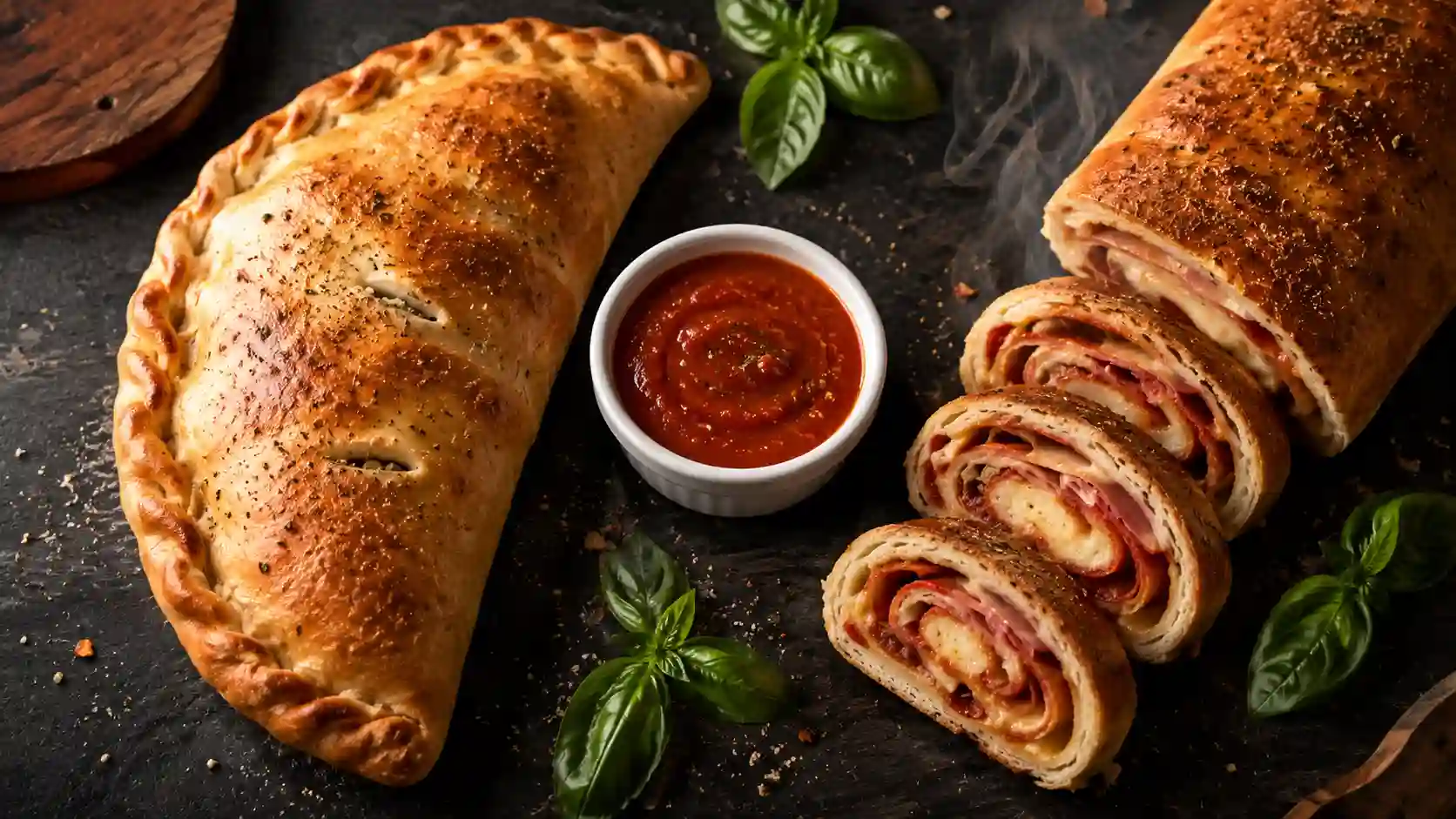
Calzone shape: Half-moon crescent. The dough circle folds exactly in half over the fillings. Edges crimp or braid into a tight seal. The finished product resembles a large empanada or pasty. Steam vents often puncture the top crust.
Stromboli shape: Rectangular log, similar to a burrito. The dough rolls around fillings in layers, creating a spiral cross-section when sliced. Seam faces down on the baking sheet. No decorative crimping appears.
The table below locks in these differences:
| Feature | Calzone | Stromboli |
| Shape | Half-moon crescent | Rectangular log |
| Sealing | Crimped edges | Rolled, seam down |
| Cross-section | Single pocket | Spiral layers |
| Typical size | Single serving | Often sliced for sharing |
| Traditional sauce | Side only | Inside or side |
The Cheese Tells a Story Too
Calzone leans heavily on ricotta. That creamy, slightly grainy cheese forms the foundation alongside fresh mozzarella. The ricotta provides moisture and binds other ingredients. Pecorino or Parmesan are frequently added. This cheese combination mirrors what goes inside a classic Neapolitan pizza fritta or baked pasta dish.
Stromboli relies on low-moisture mozzarella that melts into stretchy strands without releasing excessive water. Ricotta rarely appears. Provolone sometimes shows up for sharpness. The cheese selection prioritizes structural integrity during rolling and slicing.
Meat Selections Define Regional Tastes
Calzone fillings stay true to southern Italian tradition. Salami, prosciutto cotto, or soppressata provide cured meat flavor. Many calzones feature vegetable-forward fillings like sautéed escarole, mushrooms, or artichokes. The meat-to-cheese ratio tilts toward cheese dominance.
Stromboli embraces Italian-American deli culture. Pepperoni, capicola, Genoa salami, and cooked sausage pile high. Vegetables remain rare. The meat ratio exceeds what you would find in any calzone. This reflects the American appetite for protein-heavy sandwiches translated into pizza dough form.
Serving and Eating Experience
Pizzerias present calzones as individual meals. The half-moon arrives on a plate with a side of warm marinara. You cut into it with a fork and knife, exposing the molten cheese pocket. Each bite gets dipped according to personal preference.
Stromboli arrives as a whole log, often sliced into pinwheel medallions exposing the spiral interior. A large stromboli feeds multiple people. Party platters feature these slices arranged for grabbing. The communal nature separates it from the individual-focused calzone.
Dough Differences Worth Noting
Both use pizza dough as the base, but preparation diverges. Calzone dough trends thinner, stretched to the same dimensions as a pizza base before folding. The double-layer crust after folding creates moderate thickness. Olive oil sometimes brushes the exterior for color.
Stromboli dough might start slightly thicker to withstand rolling without tearing. Some recipes incorporate egg wash on the exterior, producing a shinier, darker crust. The spiral structure means dough layers separate fillings, creating a breadier bite than the single-pocket calzone.
Regional Availability and Menu Confusion
American pizzerias routinely blur the lines. Some menus offer a “calzone” filled with sauce inside, which technically describes a stromboli. This mislabeling spread as Italian-American cuisine regionalized across the country. Northeast shops maintain better distinctions than those in the Midwest or West.
Authentic Italian restaurants respect the calzone tradition more strictly. If you want the real thing, ask one question: “Does your calzone contain ricotta and come with sauce on the side?” The answer tells you everything about their approach.
Making Either at Home: Key Steps
Simple Calzone Process
- Stretch pizza dough into a circle
- Spread ricotta mixture on one half, leaving a border
- Add mozzarella and cured meats
- Fold empty half over, crimp edges tightly
- Cut steam vents
- Bake at 475°F until golden, about 15-18 minutes
- Serve with warm marinara on the side
Simple Stromboli Process
- Stretch dough into a rectangle
- Layer meats and cheese across the surface
- Roll tightly from one long edge, seal seam
- Place seam-down on baking sheet
- Brush with egg wash, cut shallow vents
- Bake at 400°F for 20-25 minutes
- Slice into rounds, serve with marinara optional
Where to Find Documentation
Romano’s Stromboli shop still operates in Essington, Pennsylvania. Their website details the origin story directly from the family. The Associazione Verace Pizza Napoletana maintains official standards for calzone preparation. Food historian John Mariani documented the stromboli invention in The Dictionary of Italian Food and Drink, placing it firmly in 1950s Philadelphia.
Frequently Asked Questions
What is the main difference between stromboli vs calzone?
The main difference centers on sauce placement and shape. Calzone folds into a half-moon with sauce strictly on the side. Stromboli rolls into a log and often contains sauce baked inside.
Does stromboli vs calzone use different cheeses?
Yes. Calzone typically uses ricotta plus fresh mozzarella. Stromboli relies on low-moisture mozzarella, sometimes with provolone. Ricotta rarely appears in stromboli.
Which dish came first, stromboli or calzone?
Calzone came first. Naples bakers created calzones in the 1700s as portable worker meals. Stromboli was invented around 1950 in Philadelphia by Nazzareno Romano.
Can you use the same dough for stromboli vs calzone?
Yes, both start with standard pizza dough. Calzone stretches the dough thinner into a circle. Stromboli uses a slightly thicker rectangular shape to handle the rolling process.
Why does my restaurant calzone have sauce inside?
That restaurant serves a mislabeled stromboli. Traditional calzone never contains sauce inside. Ask about ricotta and sauce placement before ordering to know what you will receive.
Is stromboli vs calzone a single serving dish?
Calzones almost always serve one person. Stromboli can serve one but often arrives as a larger log sliced for sharing among multiple people.
The Final Bite That Settles Everything
Walk into any pizzeria now and you hold the power. You see a half-moon with crimped edges, ricotta on the ingredient list, and sauce served separately. That is a calzone. You spot a rolled log sliced into spirals, pepperoni and mozzarella layered inside, sauce maybe baked right in. That is a stromboli. The confusion ends here.
Next time someone at your table asks about the stromboli vs calzone mystery, you can answer before the server arrives. Better yet, order one of each. Taste the ricotta-rich simplicity of a proper calzone alongside the meat-packed spiral of a stromboli. Compare the dipping experience against the sauce-baked-inside approach. Your palate will lock in the difference permanently.
Share this article with anyone who still points at a calzone and calls it a stromboli. They will thank you at their next Italian dinner.